
 English
 日本語
日本語 한국어
한국어 中文(廣東話)
 Tagalog
 ไทย
ไทย Tiếng Việt
 Chuukese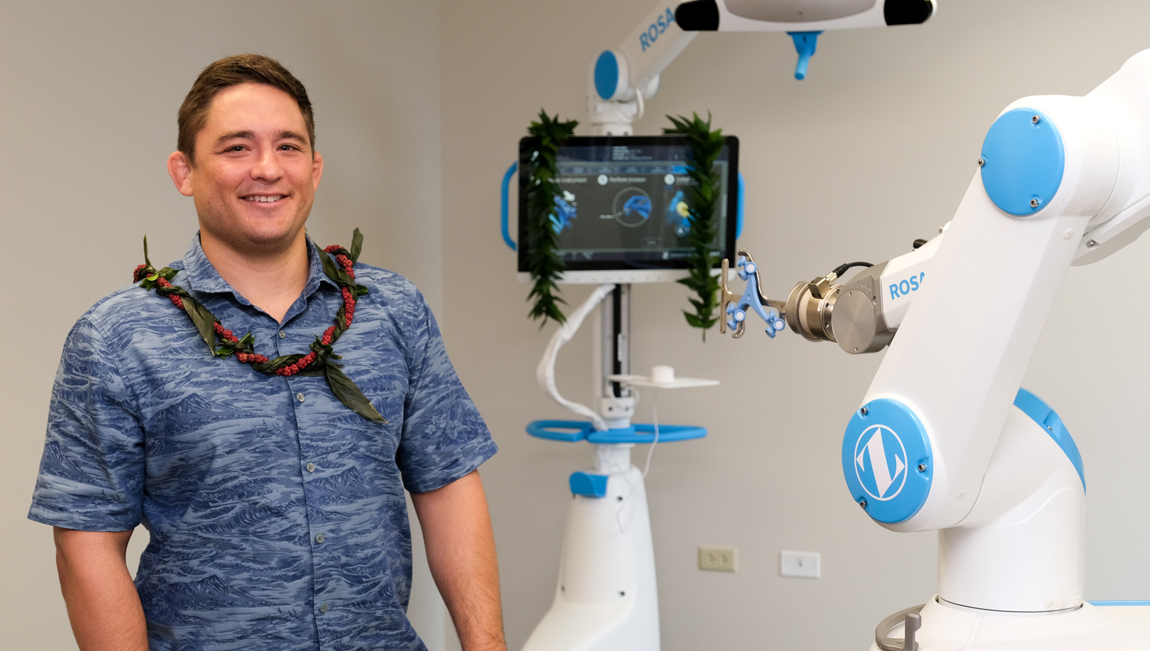
The milestone
Robotic assistance reached knee replacement years before it reached hips — the hip's deep anatomy made robotic workflows harder to build. When the ROSA® Hip platform arrived in Hawai‘i in early 2022, Dr. Morton — the first surgeon in Hawai‘i fellowship-trained in robotic joint replacement — performed the state's first robotic-assisted total hip replacement shortly after. The operation went as planned: precise cup placement, verified leg length, and a patient up walking the same day.
Why precision matters more in hips
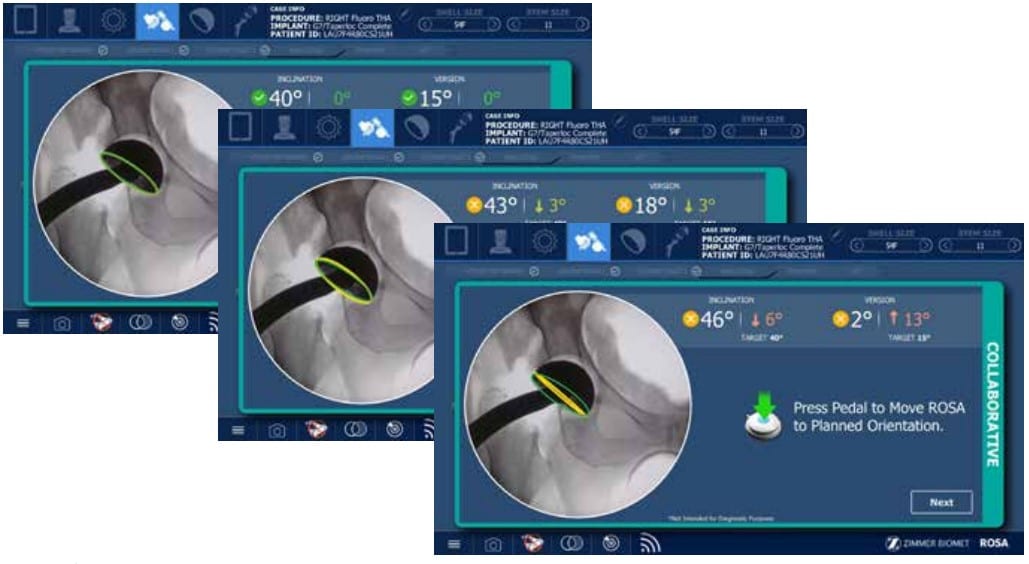
Two numbers rule hip replacement outcomes: cup position and leg length. A component a few degrees outside the safe zone raises dislocation and wear risk; a few millimeters of leg-length difference is something patients feel every step. Robotic guidance measures both in real time during surgery instead of estimating by eye — which is why Dr. Morton made it his standard for robotic hip replacement, layered on the muscle-sparing anterior approach and bikini incision option.
What it meant for Hawai‘i
Before 2022, patients wanting robotic hip surgery flew to the mainland. After it, the technology lived here in the islands — with same-day discharge, opioid-sparing anesthesia, and, within the same year, a smart knee first and a Big Island robotic first. The nickname it earned him is explained on The Robot Doc page.
Medically reviewed by Paul Norio Morton, MD, FAAOS, FAAHKS. Last reviewed: . This article is for education only and isn’t a substitute for an exam and personalized advice — schedule a consultation to discuss your situation.