
 English
 日本語
日本語 한국어
한국어 中文(廣東話)
 Tagalog
 ไทย
ไทย Tiếng Việt
 Chuukese
What post-traumatic arthritis is
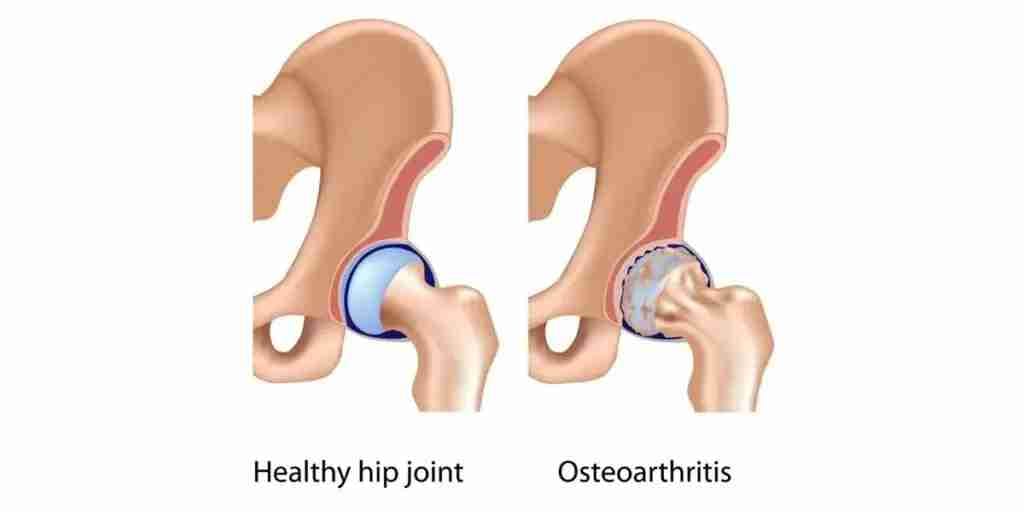
Post-traumatic arthritis is joint damage that develops after an injury — a broken bone that involved the joint surface, a dislocation, or a ligament tear — rather than from decades of ordinary wear. It behaves differently from typical age-related osteoarthritis in ways that matter. It tends to strike a single joint, the one that was hurt, while the others stay healthy. And it often appears years or even decades earlier than garden-variety arthritis, in patients who are otherwise young and active.
That combination — one worn joint in an otherwise fit person — shapes everything about treatment. A 38-year-old with a single knee or hip that was fractured in a crash or a fall is a very different patient from a 72-year-old with wear across several joints. The goal is the same, to relieve pain and restore function, but the strategy has to respect that this person may need that joint to serve them for another forty or fifty years. If your original injury was the trigger, that long timeline is the central problem to solve.
Why an injured joint wears out faster
The damage often begins the day of the injury. When a joint takes a violent impact, cartilage cells can be injured or killed on the spot — a hit the cartilage never fully recovers from, even after the bone heals. That initial insult sets a slow breakdown in motion long before any pain shows up.
Two mechanical problems then accelerate it. First, if a fracture ran through the joint surface and healed even slightly out of place, the joint no longer glides smoothly — a small step-off or angle concentrates pressure on one patch of cartilage with every movement. Second, injuries that leave a joint unstable, like an unhealed ligament tear, let it shift abnormally and grind where it shouldn't. Add altered alignment from the original injury, and the joint is loaded in ways it was never designed for. This is why a knee or hip can look fine for years after an injury and then, seemingly out of nowhere, start to ache — the biology and the mechanics were working against it the whole time. The same process after an ACL injury is covered in detail in arthritis after an ACL tear.
Treatment starts conservative — and buys time
Treatment almost always starts without surgery, and in a young joint that conservative phase is worth taking seriously. Strengthening the muscles around the joint, managing body weight, activity modification, anti-inflammatory medication, and injections — including orthobiologic options — can control symptoms for years. In a patient with decades ahead of them, every good year bought without an operation is a year of implant wear not spent.
That is the strategic logic behind going slow. Joint replacement is a superb operation, but no implant lasts forever, and the younger you are when you get one, the more likely you are to need it revised down the road. So in post-traumatic arthritis, the early goal is often to preserve the natural joint as long as it can serve you comfortably — exhausting the non-replacement options before committing to hardware. The exception is a joint that is already severely damaged and genuinely limiting your life; there is no virtue in suffering through years of misery to protect a timeline. The right pace is a judgment call, and one worth making with a surgeon who treats both the injury and the arthritis.
When surgery helps: alignment, preservation, and replacement
When the natural joint can no longer be preserved, surgery has more to offer than replacement alone. If the trouble is a fracture that healed out of alignment, a realignment procedure — an osteotomy that shifts load off the worn area onto healthier cartilage — can sometimes postpone replacement for years while keeping your own joint. Correcting the mechanics that caused the problem is often the smartest first surgical move in a young patient.
When the joint truly is worn out, modern replacement is durable and reliable. For younger patients the details matter: Dr. Morton favors cementless implants where appropriate, because strong young bone can grow into a porous implant surface and form a durable biologic bond — a fixation method well suited to active people who will demand a lot from the joint. Robotic planning helps place every implant in precise alignment, one of the factors linked to how long a replacement lasts. And when the original injury was a fracture near a joint, fracture care and reconstruction sometimes happen together. The point is that a good reconstruction surgeon has a whole ladder of options, not a single hammer.
The young-patient calculus
For younger patients the hardest question isn't whether a joint can be replaced — it is when. Age alone doesn't disqualify anyone, and it doesn't mandate surgery either; the real drivers are how bad the joint is, how much it is limiting your life, and what you are willing to trade. Waiting protects the timeline but costs you good years lived in pain. Operating early buys quality of life now but may commit you to a revision later. Neither answer is automatically right.
What helps is a clear-eyed conversation about your specific joint and your specific life, which is exactly the discussion in am I too young for a hip replacement. The reassuring part: implants and techniques keep improving, and the durability of modern implants has come a long way, so a replacement done today is a better bet to last than one done a generation ago. If an old injury is stealing your activity now, the worst move is to guess in either direction. An honest consultation — exam, X-rays, and a frank talk about tradeoffs — is how you find the right timing for you.
Medically reviewed by Paul Norio Morton, MD, FAAOS, FAAHKS. Last reviewed: . This article is for education only and isn’t a substitute for an exam and personalized advice — schedule a consultation to discuss your situation.