
Orthopedic hardware—such as screws, plates, rods, and pins—is essential for stabilizing fractures and correcting deformities. While these implants are often designed to remain in the body indefinitely, certain situations may necessitate their removal.
This guide explores the indications for hardware removal, potential risks, and recovery process, helping patients understand when and why this procedure may be needed.
Indications for Orthopedic Hardware Removal
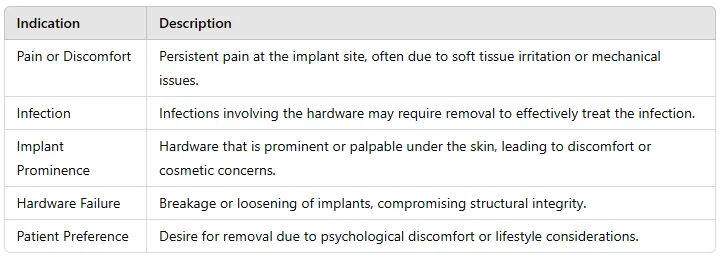
The decision to remove orthopedic hardware is complex and based on several patient-specific and clinical factors. Common reasons include:
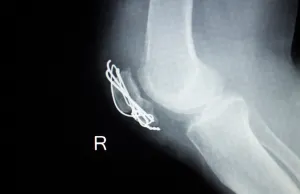
Pain and Discomfort
Pain after orthopedic surgery hardware is one of the most common indications for removal. Studies show mechanical symptoms, including implant prominence or irritation, are frequently reported.
Management Steps:
- Clinical Evaluation: Pain characteristics are assessed during a thorough examination. Often, there is tenderness in the area where the hardware is located.
- Imaging Studies: X-rays or CT scans evaluate implant placement and bone healing.
- Surgical Intervention: Hardware removal may be recommended if conservative treatments, such as physical therapy or medications, fail.
Infection
Infections involving implants, though uncommon, can be severe and often necessitate hardware removal. A review of 83 cases identified the infection as one of the more significant reason for the removal (PubMed).
Management Steps:
- Diagnosis: Confirmed through blood tests, imaging, and clinical examination.
- Treatment: This may involve antibiotics, surgical debridement, and hardware removal to eliminate the infection entirely.
Implant Prominence
Prominent or superficial hardware may cause discomfort or cosmetic concerns, leading patients to request removal. Prominence is a common reason for elective implant removal (OrthoBuzz).
Management Steps:
- Physical Assessment: Determines whether hardware prominence significantly affects quality of life.
- Surgical Consideration: Removal is advised if discomfort or functional limitations arise.
Hardware Failure
Hardware failures, such as breakage or loosening, can compromise bone stability and function.
Management Steps:
- Imaging Tests: Assess implant integrity and its effect on the surrounding bone.
- Surgical Removal or Replacement: A new implant may be required to restore structural support.
Patient Preference
Some patients prefer hardware removal due to psychological discomfort or lifestyle limitations. While not always medically necessary, such requests are considered case-by-case.
Management Steps:
- Counseling and Education: Patients are informed about removal’s potential risks and benefits.
- Shared Decision-Making: Preferences are balanced with clinical recommendations.
Risks of Hardware Removal Surgery
Although hardware removal is generally safe, there are risks associated with any surgical procedure:
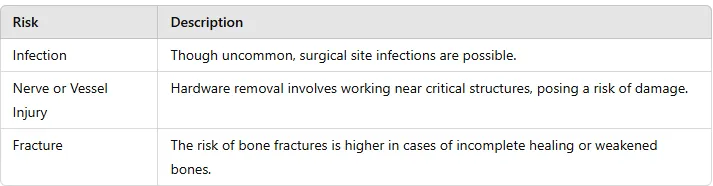
Proper planning and surgical expertise minimize these risks and improve outcomes.
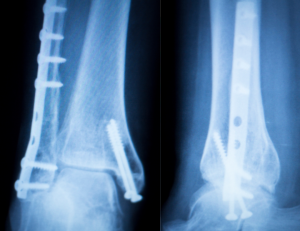
Postoperative Recovery After Hardware Removal
Recovery timelines vary depending on the implant location and patient health. Key considerations include:
- Pain Management: Pain is usually mild and managed with over-the-counter analgesics.
- Activity Restrictions: Patients may need temporary activity modification to promote healing.
- Physical Therapy: Rehabilitation may be recommended to restore strength and function in the affected area.
Common Locations for Hardware Removal
Certain areas of the body are more likely to require hardware removal due to prominence, functional interference, or discomfort.
- Ankle and Foot: Plates and screws can often irritate due to thin, soft tissue coverage.
- Wrist and Forearm: Prominent plates and screws may lead to soft tissue irritation during activities.
- Knee: Screws from fracture repair surgeries can sometimes cause discomfort or prominence.
- Hip: Fixation hardware, such as pins or screws used in hip fractures, can become symptomatic post-healing.
- Clavicle (Collarbone): Hardware used in clavicle fractures is often removed due to prominence under the skin.
Statistical studies report that hardware removal is most common in the lower extremities (47%), followed by the upper extremities (32%) (PubMed).
Conclusion
Hardware removal surgery is a decision that requires careful evaluation of clinical indications, risks, and patient preferences. Consultation with an orthopedic surgeon is essential to determine whether removal is appropriate for your needs.
For more information or to discuss your options, schedule a consultation with Dr. Paul Morton today.