
The short answer
A release is a small procedure that divides one tight structure to take pressure off what runs beneath it. For carpal tunnel syndrome, that structure is the transverse carpal ligament over the median nerve at the wrist. For trigger finger, it is the A1 pulley over the flexor tendon at the base of the finger. In an ultrasound-guided release, the work is done through a small incision while ultrasound imaging shows the nerve, tendons and nearby structures.
Pacific Bone & Joint offers both procedures and publishes the full home instructions for each: the ultrasound-guided carpal tunnel release protocol and the ultrasound-guided trigger finger release protocol. The recovery details on this page come from those two documents.
- Carpal tunnel release — divides the transverse carpal ligament to make room for the median nerve
- Trigger finger release — divides the A1 pulley so the flexor tendon can glide without catching
- Ultrasound guidance — imaging shows the structures during the release
- Diagnosis first — the cause of your symptoms is confirmed before a release is planned
- Gentle movement early — light finger motion starts once the local anesthetic wears off
Carpal tunnel syndrome: a nerve short on room
The carpal tunnel is a narrow passage at the base of the palm. The wrist bones form its floor and sides, and a firm band called the transverse carpal ligament forms its roof. The median nerve and the tendons that bend the fingers pass through it. When pressure inside the tunnel rises, the median nerve is squeezed.
The typical symptoms are numbness and tingling in the thumb, index, middle and part of the ring finger, often worse at night or with activities that hold the wrist bent. Over time the hand can feel clumsy or weak, and in longstanding cases the muscles at the base of the thumb can weaken.
Many hand symptoms can look like carpal tunnel syndrome, including a pinched nerve in the neck or nerve problems elsewhere in the arm. That is why the diagnosis comes before the treatment.
Trigger finger: a tendon that catches
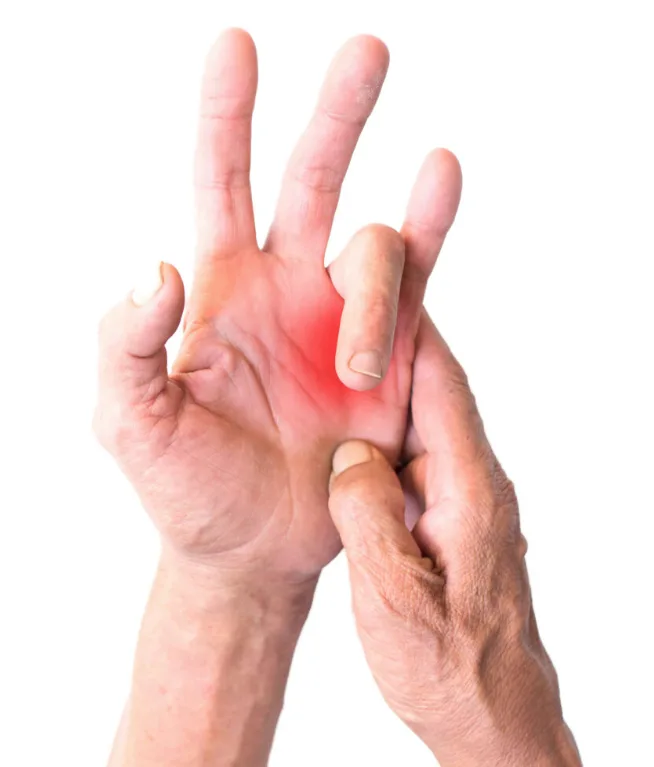
The tendons that bend each finger run through a series of pulleys, which are short tunnels of tissue that hold the tendon close to the bone. The first of these, at the base of the finger in the palm, is the A1 pulley. In trigger finger, the tendon no longer glides smoothly through that pulley.
The result is a finger or thumb that catches, clicks or locks when it bends, sometimes needing the other hand to straighten it. The base of the finger in the palm is often tender, and symptoms are commonly worse first thing in the morning.
What an ultrasound-guided release is
The goal of a release is the same however it is done: divide the tight structure and leave everything around it alone. In a carpal tunnel release, the transverse carpal ligament is divided so the tunnel has more room for the median nerve. In a trigger finger release, the A1 pulley is divided so the tendon can move freely.
With ultrasound guidance, the release is performed through a small incision while ultrasound imaging shows the ligament or pulley and the nerve, tendons and blood vessels beside it. The hand is numbed with local anesthetic, which may leave it numb for several hours afterward.
The wound is small and is closed with skin strips, glue or stitches. A small incision does not mean the nerve and hand are fully recovered, which is why activity still builds gradually over the following weeks.
Evaluation comes first
No release is planned until the diagnosis is confirmed. Numbness, tingling, catching and hand pain have several possible causes, and a release only helps when the tight ligament or pulley is actually the problem. The first step is a visit to go through your symptoms and examine your hand; whether any further testing is needed is decided there.
A release is also not usually the first treatment. In general, carpal tunnel syndrome and trigger finger are often treated first with measures such as splinting or a steroid injection, and a release is considered when symptoms persist or are more advanced. Whether a release fits your situation is a decision made with you at the visit.
To start, book an orthopedic consultation or call (808) 439-6201.
The first two days at home
The home instructions for the two procedures are nearly identical for the first two days.
- Numbness — the local anesthetic may leave the hand numb for several hours; avoid heat, sharp tools and lifting until normal feeling returns, and remove rings while the hand is swollen
- Getting home — arrange a ride and do not drive on the day of the procedure
- Elevation and cold — rest the hand above heart level when possible during the first 24–48 hours; once feeling returns, a wrapped cold pack for 10–15 minutes may help, never directly on skin
- Dressing — keep the original dressing clean and dry for 48 hours unless told otherwise; if the outer wrap feels tight, loosen it without disturbing the strips or glue over the wound
- After 48 hours — remove the outer dressing; if the wound is closed and dry, wash gently with soap and running water, pat dry and cover with a clean bandage, changed daily or whenever wet or dirty
- Strips, glue and stitches — leave skin strips or glue in place until they loosen; if you have stitches, removal is arranged for you
- Water — no soaking, swimming, hot tub or ocean until the wound is fully closed and dry, usually about 10–14 days; no peroxide, alcohol or ointment unless instructed
- Medicines — use the pain medicines listed on your discharge instructions, and resume prescribed blood thinners only according to your individual plan
Movement and return to activity
Gentle movement starts once the anesthetic has worn off: 5–10 repetitions, 4–6 times a day. After carpal tunnel release that means opening the hand and making a loose fist, touching the thumb to each fingertip, and small comfortable wrist bends with the forearm supported. After trigger finger release it means straightening the fingers, making a loose fist, and a gentle hook position. Do not squeeze hard, and do not force a bent finger straight. Stress balls, putty and grip strengthening are avoided during the first week.
A wrist splint and formal hand therapy are not routinely needed after an uncomplicated carpal tunnel release. Therapy can be added for persistent stiffness, scar sensitivity or difficulty regaining function, and it may help a finger that was stiff or bent before a trigger finger release.
Do not drive until you have normal feeling and control of the hand, can grip and turn the wheel safely, and are no longer taking sedating medicine. The complete directions, with printable PDFs, are in the carpal tunnel release protocol and the trigger finger release protocol.
- First week
Light use
Light eating, dressing, phone use and short periods of typing as comfortable. Avoid heavy lifting, forceful gripping, power tools and pressure or body weight through the palm.
- After 1–2 weeks
Add gripping and lifting
If the wound is closed and symptoms are improving, gradually increase gripping and lifting. Ease back if soreness or swelling increases later that day or the next morning.
- Follow-up
Usually 7–14 days
Keep the follow-up visit, usually 7–14 days after the procedure, and call if it has not been scheduled.
- Later
Heavy work or sport
Return when grip, hand control and wound healing allow the task safely and your care team has cleared it. Work restrictions may be set for you.
What to expect, and when to call
After carpal tunnel release: nighttime tingling may improve early. Constant numbness and weakness can improve over weeks or months, and longstanding nerve damage may not fully recover. Palm tenderness and temporary grip weakness may last several weeks.
After trigger finger release: bruising, swelling and tenderness at the base of the finger can last several weeks. A finger that was stiff before the procedure may recover more slowly. Contact the office if locking continues or returns, or the finger cannot straighten.
Call (808) 439-6201 for a fever of 100.4°F (38°C) or higher, spreading redness, pus, increasing pain, new numbness or weakness, or bleeding that continues after 15 minutes of firm pressure. Go to an emergency department promptly for a cold, pale or blue hand or finger, or for severe symptoms if you cannot reach the office. Call 911 for trouble breathing or a severe allergic reaction.
Medically reviewed by Paul N. Morton, MD, FAAOS, FAAHKS — board-certified orthopedic surgeon, fellowship-trained in adult hip & knee reconstruction and orthopedic trauma. Last reviewed: .
This page is for education only and isn’t a substitute for an exam and personalized advice — schedule a consultation to discuss your situation.