


Talofa — American Samoa patients

Advanced hip & knee surgery for Samoa & American Samoa, in Honolulu

When a joint problem is bigger than what's available at home, Honolulu is the natural next step: US medicine, US insurance, flights from Pago Pago, and a surgeon who treats Pacific patients every week — with family welcome at every stage. Patients from independent Samoa are welcome too — the same program, with self-pay packages, and travel and lodging coordination that can be arranged if you'd like help getting here from Apia.

  • Medicare & most US plans
  • Consult before you fly
  • Family-centered care
  • 10–14 day typical stay
Couple holding hands and walking along the shoreline at Makapu'u Beach on O'ahu, with the lighthouse ridge behind them.

Destination Joint Replacement for American Samoa Patients at a glance

Travel
Flights connect Pago Pago & Honolulu
Insurance
Medicare & most US plans — we verify first
First visit
Telehealth from home
Typical stay
10–14 days for joint replacement
After you return
Telehealth follow-ups

Referral programs and coverage vary — our care coordinator confirms your benefits and puts the plan in writing before you make travel arrangements.

Why American Samoa patients come to Dr. Morton

For hip and knee problems that need specialty surgery, most American Samoa residents already know the answer involves a plane. The question is where to land. Honolulu offers the shortest path to full American specialty care: your Medicare or US insurance works here, your records stay in the US system, and you recover in a place where Pacific families are family — not foreigners.

Dr. Paul Morton is a board-certified, fellowship-trained hip & knee surgeon, raised on Hawai‘i Island, who performed the state's first robotic hip replacement. Treating patients who fly in from across the Pacific — including American Samoa — is a normal part of his week, and his fly-in program is built around it.

How it works from Pago Pago

Because an in-person first visit isn't practical from Pago Pago, everything can start at home with a telehealth consultation. We help arrange X-rays locally, review your history, and give you an honest answer about whether surgery is needed at all. When surgery is the right call, your testing, operation, and early recovery are scheduled around a single trip — with a written plan and cost estimate before you book anything.

  • Telehealth consultation and imaging review from American Samoa
  • Insurance and referral verification before travel — Medicare welcome
  • One trip to Honolulu: testing, surgery, early recovery
  • Walk the same day as surgery with the rapid-recovery protocol
  • Fit-to-fly clearance and telehealth follow-up after you're home

An older woman holds a tablet during a telehealth video visit with a doctor.
Your consultation can start with a telehealth visit from home — no flight until the plan is set.

Family is part of the plan

Pacific patients rarely travel alone — and they shouldn't. A family member as your recovery partner is genuinely good medicine: they learn your exercises with you, help with wound-care basics, and make the hotel days easier. Every teaching conversation includes the people who'll be helping you at home. Lodging is arranged directly with the hotel of your choice near the clinic — the practice is not affiliated with any property — and you don't have to sort out the trip alone: travel and lodging coordination can be arranged through the Rapid Recovery Concierge, at the TotalCare Elite level. Ask your coordinator what fits your route, and you will get the options in writing before anything is booked.

If cost is a concern, ask about transparent self-pay packages and what your coverage actually pays — many patients find the numbers are more manageable than they feared once they're in writing.

What you get in Honolulu

Dr. Morton's protocol is built for people who need to recover efficiently and get home: robotic-assisted planning for precise implant placement, muscle-sparing approaches, tourniquet-free technique, and opioid-sparing pain control. Most patients stand and walk the day of surgery. Physical therapy and wound checks happen over the following week, and you fly home cleared, confident, and with follow-ups already scheduled.
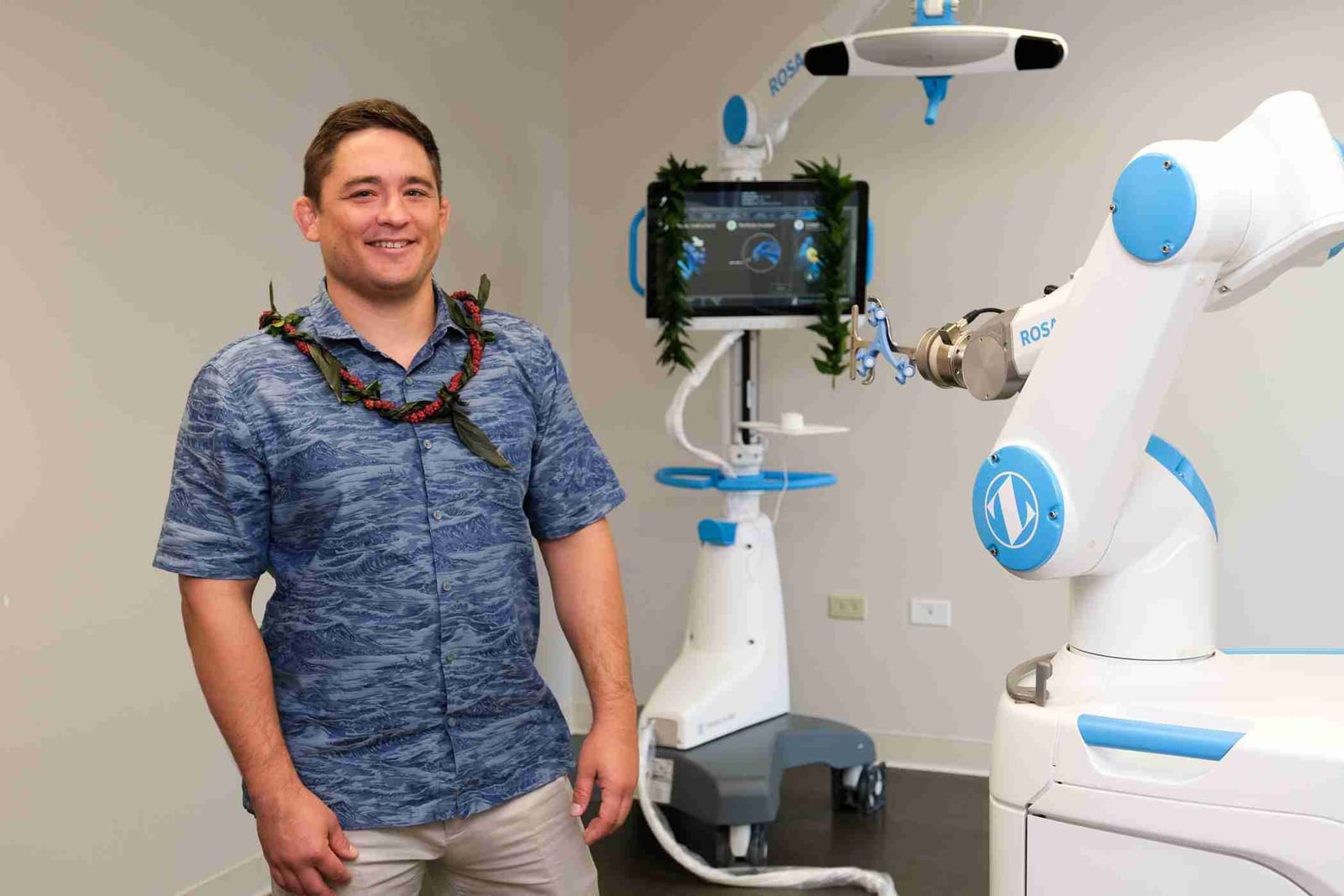
Dr. Paul Morton stands beside the ROSA Knee robotic surgical system.
Dr. Morton with the ROSA robot — he performed Hawai‘i's first robotic hip replacement.

Medically reviewed by Paul N. Morton, MD, FAAOS, FAAHKS — board-certified orthopedic surgeon, fellowship-trained in adult hip & knee reconstruction and orthopedic trauma.

This page is for education only and isn’t a substitute for an exam and personalized advice — schedule a consultation to discuss your situation.

The difference

Why patients choose Dr. Morton

  • Board-certified, double fellowship-trained hip & knee surgeon
  • Hawai‘i's first robotic hip replacement and first smart knee
  • Medicare and most major US plans accepted — verified before travel
  • Island-raised surgeon and a care team used to Pacific families
  • Same-day walking with the rapid-recovery protocol
  • One team for scheduling, records & follow-up — travel help can be arranged

Frequently asked questions

Does Medicare cover joint replacement in Honolulu for American Samoa residents?
Medicare is accepted at the practice, and many American Samoa residents carry Medicare or other US coverage. Benefits and any referral requirements vary, so our team verifies your specific plan and gives you expected costs in writing before you travel.
How long is the trip for a hip or knee replacement?
Plan on 10–14 days in Honolulu: a couple of days of final testing, surgery with same-day walking, then wound checks and physical therapy before you're cleared to fly home.
Can I bring family with me?
Yes — please do. A recovery partner makes everything easier. You book lodging near the clinic directly with the hotel of your choice, and if you'd rather not manage that yourself, travel and lodging coordination can be arranged — ask your coordinator.
What if I'm not sure surgery is what I need?
That's exactly what the telehealth consultation is for. Dr. Morton reviews your imaging and symptoms honestly — many patients start with injections or therapy first, and surgery only happens when it's truly the right answer.
Who takes care of me after I fly home?
Follow-ups continue by telehealth on a set schedule, and the team coordinates with providers near your home for anything that needs hands-on care. You leave Honolulu with a written recovery plan, not just a discharge paper.
I live in Samoa (not American Samoa) — can I come for surgery?
Yes. Dr. Morton welcomes patients from all of Samoa. US insurance rules differ — most patients from independent Samoa use transparent self-pay packages — and the office requests your records and schedules your surgery around your travel dates either way — with help arranging flights and lodging available if you want it. Flights connect through Pago Pago or direct from Apia to Honolulu seasonally; call (808) 439-6201 to start.

Talofa — start with a telehealth visit from home

Consultations in Honolulu, West Oahu, Hilo and Kona — most new patients are seen within one to two weeks — with telehealth when an in-person visit isn’t practical.

Paul Norio Morton, MD, FAAOS, FAAHKS · Hawai‘i’s first robotic hip & smart knee · Read patient reviews →

Most major plans accepted — we verify benefits before your visit. Traveling from off-island? See the fly-in patient program →

CallSchedule Appointment