
 English
 日本語
日本語 한국어
한국어 中文(廣東話)
 Tagalog
 ไทย
ไทย Tiếng Việt
 Chuukese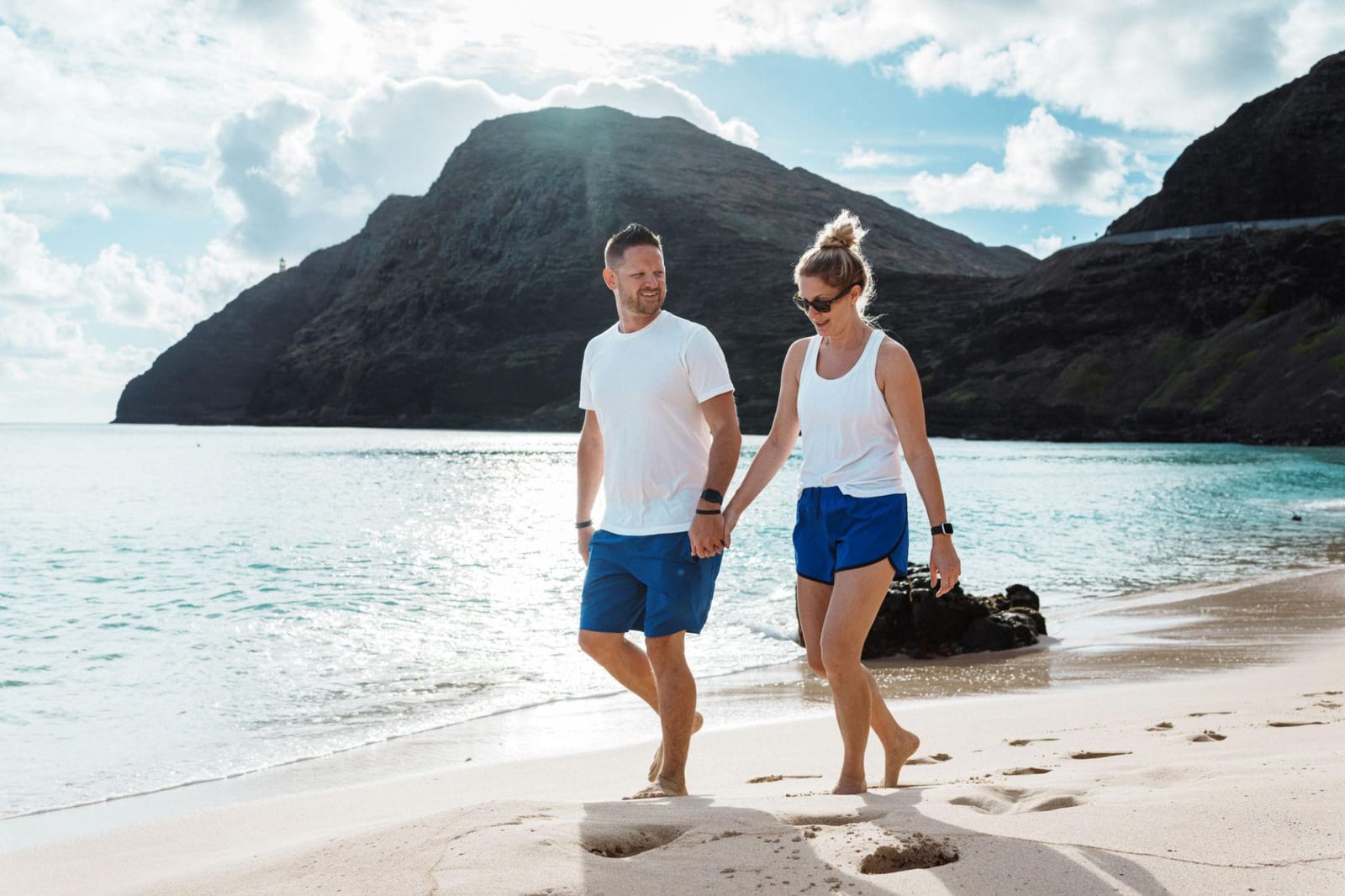
Location is part of the treatment plan
Choosing where to have hip or knee replacement surgery is a decision that shapes the entire experience — not just the operation, but the weeks of healing that follow it. Hawai‘i stands out because it offers a combination few places can match: advanced surgical care, a climate built for rehabilitation, and a culture that genuinely supports recovery. This page makes the full case — the medical infrastructure, the walking weather, the food, and the aloha.
The medicine of early mobility
The single biggest driver of a great joint replacement outcome after surgical technique is early, consistent movement. Walking pumps swelling out of the limb, feeds healing tissue, prevents blood clots, and rebuilds the strength that makes your new joint feel like yours. Every barrier to walking — ice on the driveway, sub-freezing wind, fear of slipping — is a barrier to healing. Hawai‘i simply removes them.
The climate helps in a second, quieter way: warm, consistent weather reduces the post-operative stiffness that cold and damp aggravate, so patients are more comfortable moving — and comfort compounds into consistency.
What the islands offer a healing joint
Consider the recovery checklist through an island lens:
- Year-round walking weather — no icy sidewalks, no seasonal excuse, no bundling a swollen knee into layers
- Flat, scenic routes — Ala Moana's beach paths, Waikīkī's promenades: level ground engineered for exactly the gentle distance work rehab demands
- Motivation on tap — patients walk farther when the walk is beautiful; adherence is the quiet superpower of recovering here
- Ocean therapy, once cleared — after wound healing, water walking and swimming are among the best low-impact rehab activities that exist
- Fresh, healing food — an island diet naturally rich in fruits, vegetables, lean fish, and anti-inflammatory staples that support recovering tissue
- Mood — sunshine and trade winds fight the post-surgical blues that stall many mainland recoveries
Specialized orthopedic expertise, no mainland flight required
Hawai‘i is home to highly qualified, board-certified orthopedic surgeons who focus specifically on hip and knee replacement and stay current with the field's latest advances — minimally invasive techniques, rapid-recovery protocols, and robotic-assisted joint replacement. Dr. Morton, fellowship-trained in hip and knee surgery, is certified on all four major robotic platforms — ROSA, Mako, CORI, and VELYS — and has been behind several of the state's firsts, including Hawai‘i's first robotic total hip replacement and the first robotic-assisted joint replacement on the Big Island.
The point for patients: choosing Hawai‘i does not mean compromising on surgical sophistication. The technology and technique here match anything on the mainland — the recovery environment is what the mainland can't match.
Serious medicine underneath the scenery
Paradise would mean little without the infrastructure. Dr. Morton — who performed Hawai‘i's first robotic hip replacement — operates at nationally accredited venues across the state: The Queen's Medical Center and Adventist Health Castle on O‘ahu, and Hilo Community Surgery Center, which brings Mako robotic technology to Big Island patients. Modern protocols — muscle-sparing approaches, opioid-sparing anesthesia, same-day discharge — make patients walking-capable from day one. The Persona IQ smart knee even reports recovery data to your care team while you're out enjoying the scenery.
Care that wraps around the operation
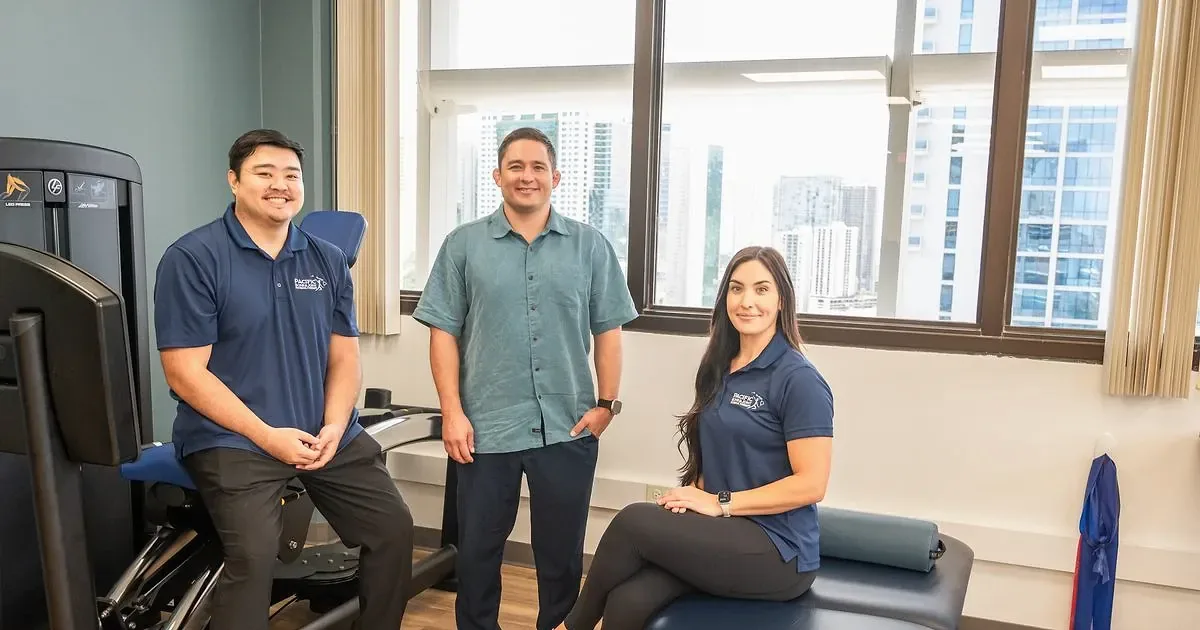
A standout feature of recovering here is how complete the care pathway is. It begins with a thorough pre-operative evaluation — medical optimization, education, and planning — and continues through a post-operative plan customized to each patient's joint, health, and goals. Physical therapy is available within the practice at both the Honolulu (Ala Moana) and Kunia clinics, so surgeon and therapist work from the same playbook. Once the incision is healed, hydrotherapy — walking and exercising in water — joins the program, and Hawai‘i is rather famously equipped for that.
Nutrition that works for your recovery
Healing tissue is hungry tissue. Hawai‘i's food culture makes eating for recovery almost effortless: fresh, locally sourced fish and lean proteins, tropical fruits, and vegetables — a diet naturally rich in the anti-inflammatory foods that support joint health and wound healing. For patients who want structure rather than good intentions, tailored dietary guidance is available, and the practice's MEND perioperative nutrition program targets the weeks around surgery specifically, when the body's nutritional demands are highest.
The aloha effect: culture, community, and morale
Recovery is not purely mechanical — morale moves outcomes. The spirit of aloha is not a slogan here; it shows up as patience in waiting rooms, neighbors who check in, and a pace of life that doesn't punish someone walking slowly with a cane. Strong community and family support networks provide real psychological lift during the vulnerable early weeks.
There is also a genuine mental-health benefit to healing in a place the mind files under "vacation" rather than "hospital." Patients recovering somewhere serene and beautiful consistently report better spirits — and better spirits mean more walks, better sleep, and steadier progress after major joint surgery.
Holistic therapies that complement rehab
Hawai‘i offers an unusually deep bench of complementary therapies — massage, acupuncture, yoga, meditation, and integrative wellness programs focused on joint health. Used alongside (never instead of) the surgical protocol and physical therapy, these can ease muscle tension, improve flexibility, and lower the stress that slows healing. Ask at your follow-up visits before adding any hands-on therapy near a healing incision; timing matters more than the therapy itself.
For traveling patients: recovery as the destination
This is the insight behind the destination joint replacement program: if you're going to spend two weeks recovering somewhere, why not somewhere engineered for it? Fly-in patients from the neighbor islands, Guam, American Samoa, the Philippines, and Australia/New Zealand schedule surgery in Honolulu, spend their early recovery walking beach paths instead of hospital corridors, and fly home cleared and confident.
The logistics are easier than most patients expect. Major airlines fly direct into Honolulu from across the Pacific and the mainland, lodging options run from full resorts to quiet recovery-friendly condos near the clinic, and the practice keeps the medical arc — pre-operative work-up, surgery, and follow-up — on one clear timeline built around your travel dates. The travel itself isn't bundled in, but it can be arranged for you: inter-island travel and lodging coordination can be arranged through the Rapid Recovery Concierge at the TotalCare Elite level, and inter-island travel and lodging coordination is also available on its own. Spouses stop calling it a medical trip somewhere around day four.

A resident's advantage too
If you already live here, the point is simpler: stop postponing surgery for a "better season." There isn't one to wait for — every month is walking weather, which means every month is recovery weather. The joint you fix this quarter is the one that carries you through years of beach walks the old joint kept canceling. With clinics in Honolulu, West O‘ahu (Kunia), Hilo, and Kona, world-class joint replacement no longer requires a boarding pass. When you're ready to weigh the timing honestly, the consultation is the first step — or call (808) 439-6201.
Medically reviewed by Paul Norio Morton, MD, FAAOS, FAAHKS. Last reviewed: . This article is for education only and isn’t a substitute for an exam and personalized advice — schedule a consultation to discuss your situation.