
Locations
Hilo Community Surgery Center — Hawai‘i Island
For most Big Island hip and knee replacements, there is no flight to O‘ahu: Dr. Morton performs Mako robotic surgery himself at Hilo Community Surgery Center, with consultations, pre-op visits and follow-up at his Hilo and Kona clinics.
Online scheduling opens Klara, our secure booking service; a real person confirms within one business day.
Robotic joint replacement without the flight
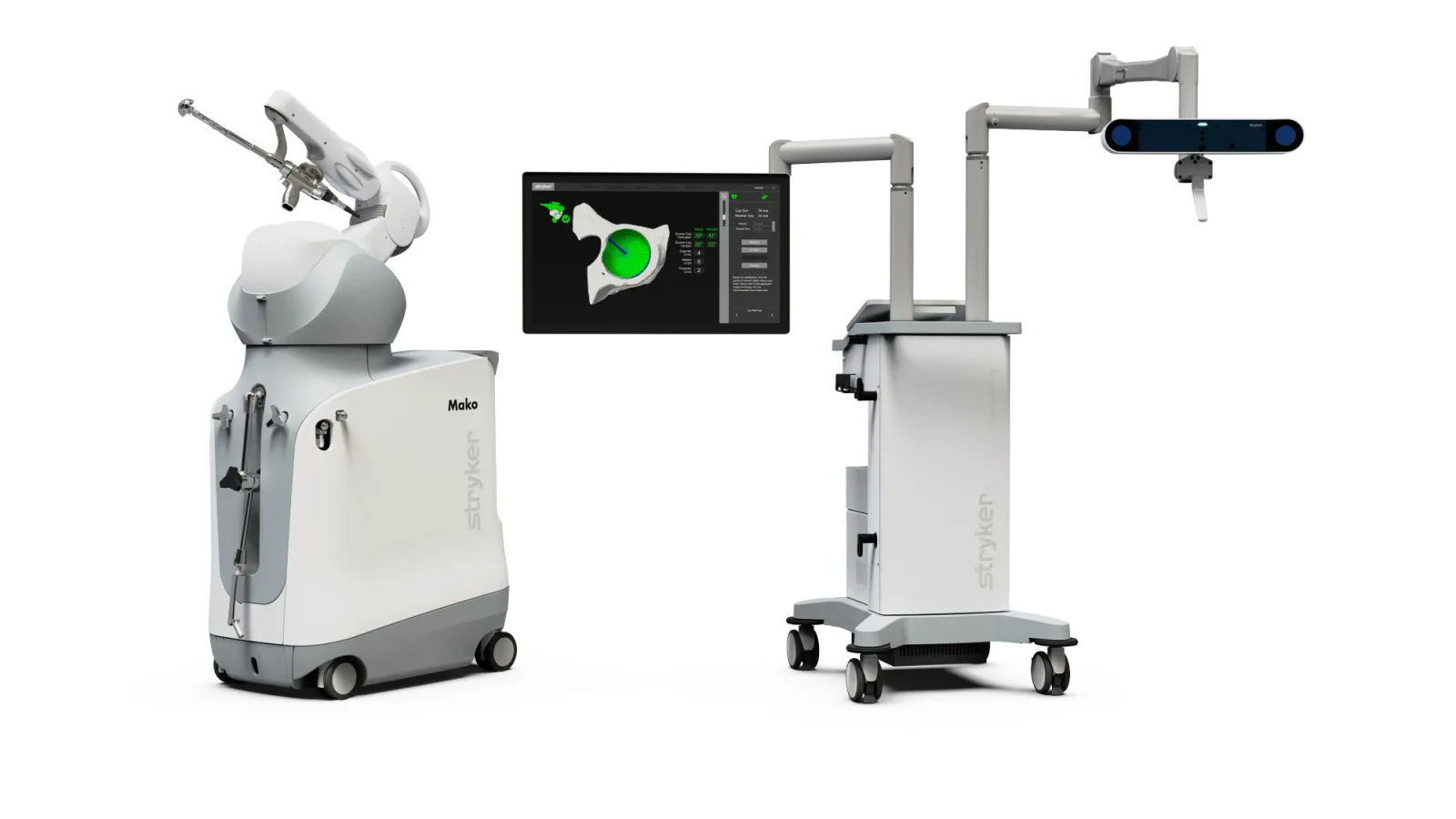
Hilo Community Surgery Center is where Dr. Morton performs Mako robotic hip and knee replacements on Hawai‘i Island — so for most Big Island patients, a routine joint replacement no longer means a flight to O‘ahu. Dr. Morton performs your operation himself. Every Mako hip and knee starts with a CT scan of your own joint — no IV contrast needed — which becomes the 3D model your implant sizes and positions are planned on before surgery day. In the operating room, the robotic arm holds the surgery to that plan.
Dr. Morton grew up in Kea‘au and performed the Big Island's first robotic-assisted joint replacement in March 2022. With Mako surgery in Hilo, most patients can keep the whole journey — consultation, surgery and recovery — on the island where they live.
Who has surgery here
Your procedure, your health and your insurance decide where your surgery happens. The surgery center has no overnight stay — everyone who has surgery here goes home the same day — so it is often a fit for:
- East Hawai‘i patients — Hilo, Kea‘au, Pahoa, Puna, Volcano, Honoka‘a and Waimea, seen at the Hilo clinic
- West Hawai‘i patients — Kailua-Kona, Keauhou, Waikoloa, Kohala and South Kona, seen at the Kona clinic; surgery day is a drive across the island instead of a flight to O‘ahu
- Hip and knee replacements without major complexity — complex revisions are planned at a hospital (see below)
- Generally good health, with any medical conditions well controlled and cleared before surgery
- A companion to drive you home and stay with you for at least the first 24 to 72 hours
Before surgery: your visits stay in Hilo or Kona
Everything before and after surgery day happens at Pacific Bone & Joint's Big Island clinics — the Hilo clinic at 75 Puuhonu Pl, Suite 204, and the Kona clinic at 75-184 Hualalai Rd, Suite 205: your consultation, imaging review, pre-operative visit and follow-ups. Telehealth covers the gaps between clinic days. Before surgery you will also have the CT scan your Mako plan is built from, medical clearance from your primary care provider, and time to prehab and set up your home.
The surgery center is your surgical venue, not your clinic. Before surgery day, your coordinator confirms your arrival time, where to park and how to check in. Scheduled patients also get the full step-by-step guide in the Your Surgery Hub.

Surgery day at a glance
- Arrive at your confirmed time with your companion. Bring a photo ID, your insurance card, your medication list and your CPAP if you use one; leave jewelry, valuables and contact lenses at home. Follow the eating and drinking cutoffs in your written instructions.
- Safety checks. The team reviews your plan, confirms your procedure, marks the surgical site, and verifies your medications and allergies.
- Anesthesia. Most patients have a spinal with light sedation plus nerve blocks, so pain is controlled while your legs can still work. General anesthesia is used when clinically indicated.
- Mako robotic surgery. Dr. Morton performs your operation from the plan built on your CT, with muscle-sparing technique — a direct anterior approach for most hips, and a subvastus, tourniquet-free approach for knees when appropriate.
- Up and walking. Most patients stand and walk within hours of surgery.
- Home when you are ready. About 90% of Dr. Morton's patients go home the same day, once the discharge milestones below are met.
Going home the same day — and your companion's role
Nobody goes home on a timer. You are discharged when you are medically stable, your pain is controlled with your pill plan, you are awake and alert, you can walk safely with your walker and use the bathroom on your own, and your companion and recovery plan are ready. The surgery center has no overnight stay, so if your health might call for a night of monitoring, Dr. Morton plans your surgery at a hospital from the start; and if you need more time on the day, the team decides the safest next step with you. Nothing went wrong; a little more time was simply the safer choice. Read more about the same-day pathway.
Your companion matters more than they might think. They do not change dressings, give wound care or run physical therapy — they need to be there:
- Drive you to surgery, home afterward, and to your first follow-up visit
- Stay with you for at least the first 24 to 72 hours, including overnight
- Keep medicines on schedule, with meals, water, and ice and elevation after every walk
- Walk with you — short walks every hour while you are awake
- Watch and call — the office at (808) 439-6201, after hours (808) 524-2575 (Physicians Exchange), and 911 for chest pain, sudden shortness of breath or fainting. See when to call.
When surgery belongs at a hospital instead
A surgery center is the right setting for many joint replacements, not all of them. Revision surgery with significant bone loss, joints complicated by prior infection, complex fracture reconstructions, and patients whose heart, lung or other medical conditions warrant hospital-level monitoring are better served with a full hospital — ICU, specialists and blood bank — behind the operation.
For Big Island patients, planned complex and revision cases may be scheduled at a full-service hospital on O‘ahu, such as The Queen's Medical Center, organized through the interisland program as one planned trip — testing, surgery and therapy scheduled before you fly. Consultations, pre-op and follow-up stay in Hilo or Kona either way. Venue follows the patient, not habit: your procedure, your health and your insurance decide where your surgery happens, and you will always know why yours is recommended where it is.
Services at this location
Pacific Bone & Joint clinic locations
Pacific Bone & Joint — Honolulu (Ala Moana)
1441 Kapiolani Blvd, Suite 2020, Honolulu, HI 96814
Serving Honolulu, Waikīkī & East Oahu
Pacific Bone & Joint — West Oahu (Kunia)
94-673 Kupuohi St, Suite C205, Waipahu, HI 96797
Serving Kapolei, Ewa Beach, Waipahu, Pearl City, Mililani & Central Oahu
Pacific Bone & Joint — Hilo
75 Puuhonu Pl, Suite 204, Hilo, HI 96720
Serving Hilo, Kea‘au, Puna, Volcano & East Hawai‘i Island
Pacific Bone & Joint — Kona
75-184 Hualalai Rd, Suite 205, Kailua-Kona, HI 96740
Serving Kailua-Kona, Waimea & West Hawai‘i Island
Frequently asked questions
Where is Hilo Community Surgery Center, and where do I park?
Do Big Island patients still have to fly to O‘ahu for a joint replacement?
Will I really go home the same day?
Who should come with me?
I live in Kona — where are my visits?
Who performs my surgery?
How is it decided whether my surgery is here or at a hospital?
Take the first step toward moving without pain
Consultations in Honolulu, West Oahu, Hilo and Kona — most new patients are seen within one to two weeks — with telehealth when an in-person visit isn’t practical.
Online scheduling opens Klara, our secure booking service; a real person confirms within one business day.
Paul Norio Morton, MD, FAAOS, FAAHKS · Hawai‘i’s first robotic hip & smart knee · Read patient reviews →
Most major plans accepted — we verify benefits before your visit. Traveling from off-island? See the fly-in patient program →